
Serving Northern Utah

Fences built to last. Designed with purpose.
Fence Resources and Tips For Utah Homeowners
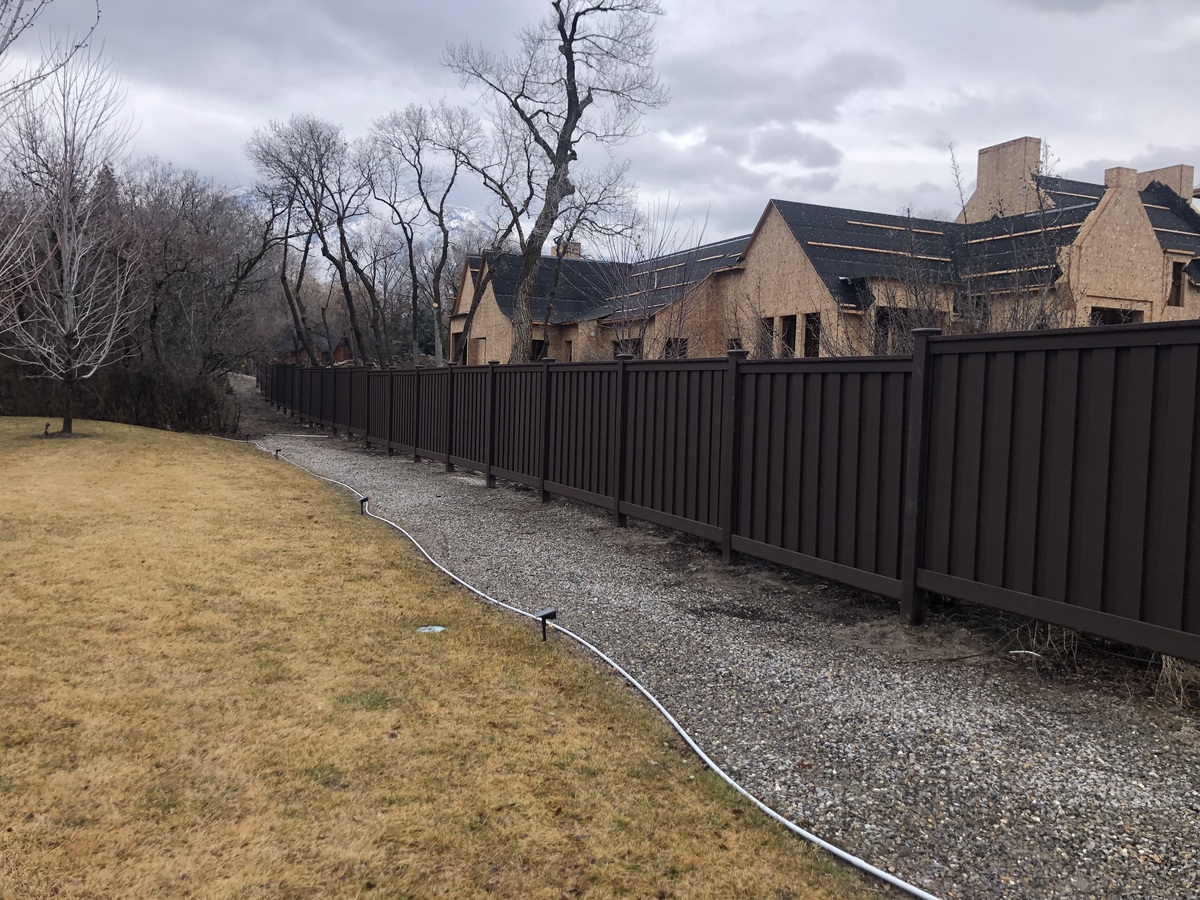
What Happens When Fence Posts Are Too Shallow: What Utah Homeowners Should Know
What Happens When Fence Posts Are Too Shallow: What Utah Homeowners Should Know
1. INTRODUCTION
If you're a homeowner in Utah thinking about installing a new fence, you’re probably wondering how deep the fence posts actually need to be—and what happens if they're not installed deep enough.
It's an important question because a fence can look perfectly straight when it's first installed and still develop problems later.
In Utah, factors like freeze-thaw cycles, snow, strong winds, changing soil conditions, and property slopes can put significant stress on fence posts.
At Haven Fence, we install fences throughout Northern Utah, and proper post installation is one of the most important parts of building a fence that stays straight and stable over time.
Utah's applicable construction requirements also recognize the importance of frost protection for permanent supports, with requirements tied to the frost line of the locality.
2. THE REAL QUESTION HOMEOWNERS ARE ASKING
What most homeowners really want to know is, “What actually happens if my fence posts aren't deep enough?”
The short answer is:
The fence can start moving.
Shallow posts have less soil and footing around them to resist lateral forces from wind, the fence itself, gate movement, and changing ground conditions.
Over time, homeowners may notice:
Posts leaning
Fence sections becoming uneven
Gates dragging
Gates no longer lining up
Gaps appearing underneath sections
Fence panels moving in the wind
Posts lifting or shifting
Sections pulling away from neighboring posts
In Utah, frost movement can be an additional concern. The Salt Lake County area, for example, lists a 24-30inch frost depth, while some higher elevations can require more consideration.
Utah doesn't have one identical frost depth everywhere. Grand County, for example, publishes a 20-inch frost depth for certain areas below 5,000 feet.
That's why homeowners shouldn't assume that one depth automatically applies to every property in the state.
3. WHAT HAPPENS IN REAL UTAH CONDITIONS?
Freeze-thaw cycles can move shallow posts
This is one of the biggest concerns.
When moisture in the soil freezes, the ground can expand. When it warms up, the ground thaws and changes again.
A post that isn't adequately supported can move with those soil changes.
The result may be a fence that looks straight during one season and noticeably leans after winter.
Wind pushes against the fence
Wind can expose a weakly installed fence very quickly.
This is particularly important for solid privacy fences.
A six-foot privacy fence has a much larger surface area for wind to push against than an open picket or chain-link fence.
That force transfers through the fence structure and into the posts.
If the posts don't have enough embedment and support, they have less resistance against that movement.
Snow adds another challenge
Snow can accumulate against a fence, particularly where drifting occurs.
A properly designed and installed fence should account for the conditions of the property, but homeowners shouldn't assume that snow places zero stress on the structure.
Sloped yards increase complexity
Installing a fence on a slope can require additional planning.
The fence may need to step or follow the grade, and the posts still need to remain properly supported.
Poorly installed posts can make an already challenging slope more difficult to manage.
Soil conditions matter
A post installed in compact, stable soil may behave differently from one installed in loose, wet, rocky, or disturbed soil.
That's why simply saying “every post should be X inches deep” isn't always enough.
The fence height, material, soil, wind exposure, local requirements, and property conditions all need to be considered.
4. COMMON MISTAKES WE SEE HOMEOWNERS MAKE
One of the most common mistakes is choosing a fence contractor based entirely on the lowest price.
A lower quote may be legitimate—but homeowners should understand why it is lower.
Some common installation mistakes include:
Posts that are too shallow
Insufficient concrete or footing support
Ignoring local frost conditions
Using the same post depth for every application
Not accounting for wind exposure
Treating gate posts like ordinary line posts
Installing tall privacy fencing without considering wind
Failing to account for soil conditions
Focusing on panel quality while ignoring the foundation
Assuming a previous fence was installed correctly
The biggest mistake?
Assuming the fence looks good today, so the installation must be good.
A fence can look perfect immediately after installation.
The real test comes after years of wind, snow, rain, freezing, thawing, and everyday use.
5. BEST OPTIONS / RECOMMENDATIONS
Our Recommendation: Trex / Composite Privacy Fence
For homeowners who want privacy and low maintenance, Trex or composite fencing is one of the options we'd recommend considering.
But the key is proper installation.
A quality composite fence still depends on:
Properly installed posts
Appropriate post depth
Adequate footing
Proper spacing
Correct rails and hardware
Proper gate construction
The fence panels aren't the foundation.
Vinyl
Best for: Low-maintenance privacy
Vinyl can be a great choice for homeowners who want privacy without staining or painting.
However, solid vinyl panels can also experience wind pressure, making proper post installation important.
Cedar
Best for: Natural appearance
Cedar is a popular choice for Utah homeowners who prefer the appearance of natural wood.
It can perform well when properly installed and maintained.
Simtek
Best for: Privacy and a highly durable-looking barrier
Simtek-style fencing can provide a substantial privacy barrier and is another option worth considering for homeowners who want a different appearance from traditional wood or vinyl.
Chain Link
Best for: Function and budget
Chain link allows more wind to pass through and can be a practical option for pets, property boundaries, and security.
6. COST / TIMELINE DISCUSSION
Fixing shallow fence posts can sometimes be more expensive than installing the posts correctly in the first place.
Depending on the condition of the fence, repairs may involve:
Removing the affected post
Excavating the existing footing
Digging deeper
Re-setting the post
Adding appropriate concrete or footing
Re-aligning fence sections
Adjusting gates
If multiple posts are shallow, repairing them individually may become increasingly labor-intensive.
What makes installation more expensive?
Several factors can affect the cost:
Fence height
Material
Number of posts
Soil conditions
Rock
Roots
Existing concrete
Property slope
Gates
Existing fence removal
Difficult access
How deep should fence posts be?
There isn't one universal depth for every Utah fence.
A common industry guideline is to bury approximately one-third of the post's total length, but local frost conditions, soil, wind, fence height, and the specific installation requirements can change the appropriate depth.
For example, some Wasatch Front jurisdictions publish a 30-inch frost depth, while other Utah jurisdictions publish different values.
The important point is that post depth should be determined for the actual project rather than guessed from a generic statewide number.
7. FAQ
What happens when fence posts are too shallow?
They can become unstable, lean, shift, or lift over time. Shallow posts are particularly vulnerable to wind and ground movement, including freeze-thaw conditions.
Can shallow fence posts cause a fence to lean?
Yes. Insufficient embedment can reduce the post's ability to resist lateral forces, which can contribute to leaning.
Can frost heave move fence posts?
Yes. Freezing ground can cause upward movement, particularly when posts aren't adequately protected from frost and the surrounding soil is susceptible to frost movement.
How do I know if my fence posts are too shallow?
Warning signs include leaning posts, loose posts, sections that move noticeably in the wind, uneven fence lines, or gates that become misaligned.
However, the visible symptoms don't always tell you exactly why the fence moved. A professional inspection may be needed to determine the cause.
Are shallow fence posts more vulnerable to wind?
Generally, yes. A deeper, properly supported post provides more resistance against lateral forces. This is especially important for solid privacy fencing.
Does fence height affect post depth?
It can. Taller fences generally experience greater wind forces, so the post and footing design needs to account for the height and fence style.
Do gate posts need special consideration?
Yes. Gates create additional movement and leverage, especially large driveway and RV gates. Gate posts may require additional structural support.
Can shallow fence posts be fixed?
Sometimes. Individual posts can potentially be removed, excavated, and properly reset. The best repair depends on the condition of the post, footing, fence sections, and surrounding soil.
Is 18 inches deep enough for a Utah fence?
You shouldn't assume that 18 inches is sufficient for every Utah fence. Local frost conditions, fence height, soil, wind exposure, and the specific fence system all matter.
8. EXPERIENCE SECTION
At Haven Fence, we've worked on fence projects throughout Lehi, Ogden, Draper, Riverton, Sandy, Salt Lake City, and surrounding Northern Utah communities.
We've installed a variety of materials, including Trex, composite, vinyl, cedar, Simtek, aluminum, and chain link.
One situation homeowners should pay attention to is when a fence quote looks dramatically cheaper than another contractor's quote.
The difference may not be the fence itself.
It could be the installation.
A contractor who proposes shallower posts, reduced footing support, fewer structural components, or a different gate construction method may be able to offer a lower upfront price.
But homeowners need to compare what they're actually receiving.
A fence isn't just the panels you see above ground. The posts and foundation underneath are a major part of the installation.
9. LOCAL SERVICE AREA
Haven Fence serves homeowners throughout Northern Utah, including Lehi, American Fork, Pleasant Grove, Highland, Saratoga Springs, Eagle Mountain, Draper, Sandy, Riverton, Salt Lake City, Ogden, Layton, and surrounding communities.
For homeowners in areas where we have dedicated service pages:
Draper: https://havenfence.com/fence-installation-draper-ut-844710
Riverton: https://havenfence.com/riverton-fence-installation
Sandy: https://havenfence.com/sandy
10. Get a Free Fence Estimate
If you're in Utah or a nearby Northern Utah community and want a fence installed with the proper support for wind, snow, freeze-thaw cycles, and local soil conditions, contact Haven Fence today for a fast, accurate quote.
Whether you're considering Trex, composite, vinyl, cedar, Simtek, aluminum, or chain link, we can help you choose a fence and installation approach that fits your property.

Crafting Confidence, One Fence at a Time
Don’t Overpay For Low Quality Materials
Living with an unattractive fence. Facing potential security issues with inadequate boundaries. Frustrated with unreliable installation options. Dealing with constant repairs on cheap materials. Wasting weekends searching for replacement options. Having your property value decrease due to a poor fence. Facing a lengthy installation process with no support. Feeling overwhelmed by conflicting options and choices.
Built for Strength, Styled for You
Every Fence. Every Finish. Every Function.
Where strength meets design - built to last, made to stand out.
Exclusive Fence Upgrade Offer
10% OFF ANY FENCE
Strengthen your boundaries and save big with our limited-time Haven Fence Discount Event. Up to 10% off your next installation. Offer ends Sept. 9, 2026.
1. How long does a typical fence installation take?
Most residential projects take 2–5 days depending on the fence type, size, and site conditions. Our team keeps you informed from start to finish to ensure timely completion.
2. What is the number one question you should ask at your fence appointment?
Ask, “What materials and installation methods do you use to make sure my fence lasts in Utah’s weather?” This helps you understand the quality and durability of the fence your contractor will install. A reliable Utah fence company should explain how materials like vinyl, cedar, or metal perform in Utah’s freezing winters, hot summers, and unique soil conditions. They should also use proper methods—like concrete-set posts and galvanized hardware—to ensure long-term strength. This question quickly shows whether your contractor knows how to build a fence that will hold up in Utah.
3. What materials do you recommend for low maintenance?
Vinyl, metal, and composite fences are the best options for minimal upkeep. They resist fading, warping, and rust, maintaining a fresh look year after year.
4. Are you fully licensed and insured?
Yes—Haven Fence is fully licensed and insured to install residential fencing in Utah. This protects homeowners from liability and ensures your fence is built to local codes and industry standards. Working with a licensed Utah fence contractor also guarantees professional installation, reliable workmanship, and compliance with city and county regulations.
5. What warranty do you offer?
Yes. Haven Fence provides material warranties based on the fence you choose—vinyl, wood, and steel all include manufacturer coverage against defects. Every installation also comes with a 1-year workmanship warranty for added peace of mind. Whether you’re in Ogden, Salt Lake, or anywhere in Utah, we stand behind our quality and make sure your fence is built to last.
6. What maintenance is required for my fence?
Maintenance depends on your fence material and Utah’s weather. Vinyl fencing is very low-maintenance and only needs occasional cleaning. Wood fences require staining or sealing every few years to protect against sun, snow, and moisture. Composite and steel fences need minimal care—just periodic washing—to stay strong in Northern Utah’s climate. Haven Fence can help you choose the right low-maintenance option for your home.
7. How much does a new fence cost in Utah?
The cost of a new fence in Utah can vary depending on the size and details of your project. We don’t price strictly by the foot, instead, we look at the entire project, including layout, yard conditions, gates, and any custom features, to give you the most accurate quote.
Your Questions, Our Expertise
Fencing Made Clear and Simple
Trusted by Homeowners. Proven by Results.
Our Clients Speak for Our Craftsmanship.
See what satisfied customers say about their Haven Fence experience.

Before installing your fence, review neighborhood guidelines, determine your privacy or security needs, and choose materials suited to your property’s terrain and climate.
Quick Links
Services
Locations
Contact Us