
Serving Northern Utah

Fences built to last. Designed with purpose.
Fence Resources and Tips For Utah Homeowners
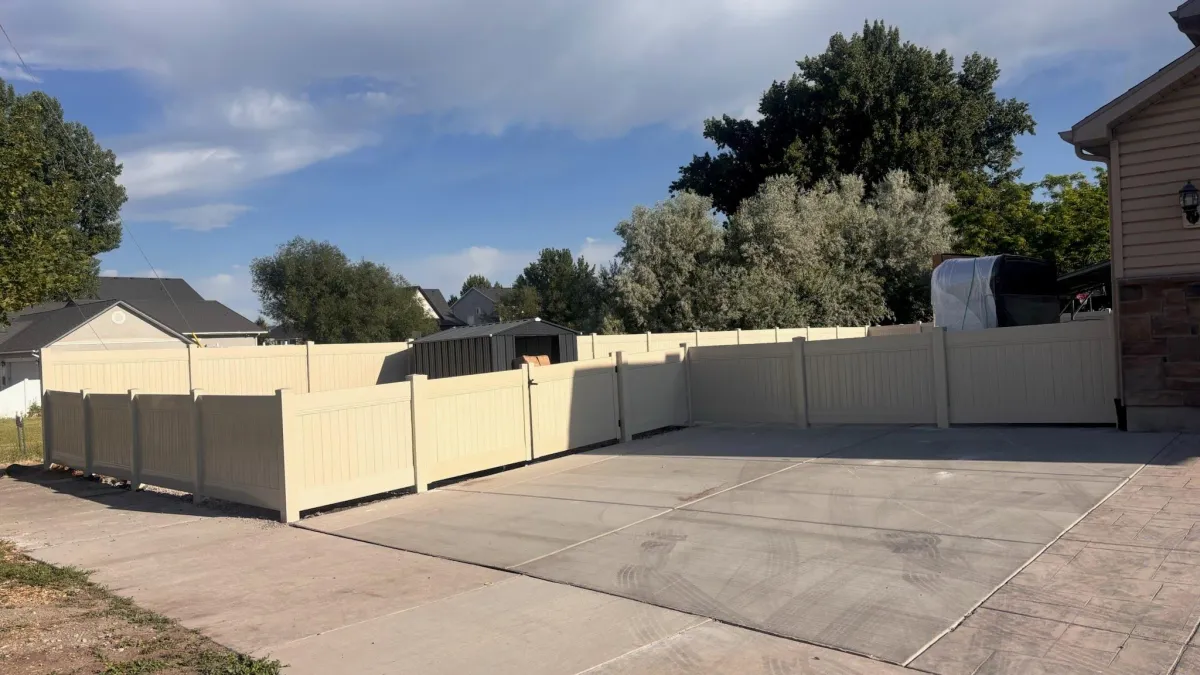
What Are the Fence Height Rules in Utah?
What Are the Fence Height Rules in Utah?
If you're a homeowner in Utah planning to install a new fence, you’re probably wondering how tall your fence can legally be. You may have seen 6-foot privacy fences throughout your neighborhood and assumed that 6 feet is the standard everywhere. However, fence height rules can vary by city, zoning district, property location, and even where the fence sits on your property.
Utah homeowners also have to consider snow, strong winds, freeze-thaw cycles, sloped yards, HOA rules, and local sight-distance requirements. At Haven Fence, we help homeowners across Northern Utah choose fencing that fits both their property and the conditions it will face.
The Real Question Homeowners Are Asking
What most homeowners really want to know is: “How tall can I make my fence without running into problems?”
There isn't one statewide residential fence height that applies to every property in Utah.
Instead, fence regulations are generally established at the local city or municipal level. That's why a fence height that is acceptable in one Utah community may not be allowed in another.
For example, Utah municipal regulations show that cities can establish their own fence standards, including different requirements for front yards, side yards, rear yards, and corner lots. Some Utah ordinances allow residential fences up to 6 or 7 feet in certain locations while imposing lower limits in front yards or visibility areas.
So before installing a fence, homeowners should check the rules for the specific city and property.
What Happens in Real Utah Conditions?
Fence height isn't just about what looks good.
Snow
A tall solid privacy fence can collect snow and experience additional loading during major winter storms. Proper post installation and construction become especially important for taller fences.
Wind
Utah's open areas and canyon corridors can experience strong winds. A solid privacy fence catches substantially more wind than an open-style fence.
This is one reason the fence material, post spacing, post depth, and concrete installation matter.
Sun Exposure
Utah's intense summer sun can affect fencing materials over time. Vinyl, wood, composite, and metal fencing all have different maintenance and weather-performance characteristics.
Freeze-Thaw Cycles
Repeated freezing and thawing can move soil around fence posts. If posts aren't installed appropriately for the site, you can eventually see leaning sections, shifting posts, or gate alignment problems.
Sloped Yards
A fence on a slope may need to step or follow the grade. This can affect both the appearance and how the allowable height is determined.
Corner Lots
Corner lots are particularly important because visibility requirements can limit fence height near intersections and driveways.
For example, Utah municipal regulations commonly create clear-view areas where taller or solid fences are restricted. One Utah ordinance limits solid fences in a designated clear-view area to 2 feet, while more open fencing may be allowed higher.
The exact requirement depends on the municipality.
Common Mistakes We See Homeowners Make
One of the biggest mistakes is assuming:
“Every fence in Utah can be 6 feet tall.”
That's not necessarily true.
Other common mistakes include:
Assuming city rules are the same across Utah
Copying a neighbor's fence height
Installing a tall fence in a front-yard setback
Ignoring corner-lot visibility requirements
Forgetting HOA restrictions
Measuring fence height incorrectly on a slope
Installing before confirming property lines
Choosing a fence material before checking local requirements
Assuming an existing fence proves the current rules
Getting a quote without discussing height and placement
A fence that is allowed in a backyard may not be allowed along a front property line or near a street.
What Is the Best Fence Height for a Utah Home?
The best fence height depends on what you're trying to accomplish.
4-foot fence
A 4-foot fence can work well when you want to define the property without creating a completely enclosed appearance.
It may also be appropriate in areas where local rules restrict taller fencing.
5-foot fence
A 5-foot fence provides more separation while maintaining a somewhat open appearance.
6-foot privacy fence
A 6-foot fence is one of the most common choices for backyard privacy where local regulations allow it.
It can provide significant separation from neighbors, block views, and create a more private outdoor space.
Taller fences
Fences taller than 6 feet may be restricted or require additional approvals depending on the city and zoning district.
For example, Utah municipal ordinances can specifically require permits or land-use approvals for fences above certain heights.
That's why homeowners shouldn't assume that going from 6 feet to 7 or 8 feet is simply a matter of adding taller panels.
How Do Utah Cities Differ?
This is one of the most important things to understand about Utah fence regulations.
There is no single fence-height rule that applies identically across every Utah city.
For example, municipal regulations can establish different maximum heights for residential rear and side yards, front yards, corner lots, and nonresidential properties.
South Jordan's published residential requirements, for example, distinguish between rear/side-yard fencing and front-yard fencing, with additional clear-vision restrictions.
Other Utah municipalities have different standards.
That means homeowners in Lehi, Ogden, Draper, Salt Lake City, Sandy, Provo, American Fork, or other communities should check the regulations for their specific city.
What About HOA Fence Height Rules?
HOA rules can be just as important as city regulations.
Your city may allow a particular fence height while your HOA restricts it.
An HOA may have requirements for:
Maximum fence height
Fence color
Fence material
Fence style
Front-yard fencing
Gate design
Setbacks
Landscaping around the fence
If you're in an HOA community, check the CC&Rs and architectural guidelines before ordering materials.
Cost and Installation Considerations
Fence height can also affect installation costs.
A taller fence generally requires more material, and the installation may require additional attention to structural support.
Other factors affecting the total price include:
Linear footage
Material
Number of gates
Large driveway or RV gates
Existing fence removal
Terrain
Sloped yards
Access to the property
Post depth
Soil conditions
Local requirements
For example, a 6-foot privacy fence with a large RV gate on a sloped property can be substantially more involved than a basic 4-foot fence on a flat yard.
That's why a professional estimate should account for the actual property rather than using height alone to determine the price.
A Real-World Installation Lesson
We recently worked on a project where the homeowner was comparing different fence options primarily based on height and price.
The important part wasn't simply choosing the tallest fence. The property layout, gate locations, terrain, and installation method all affected the final design.
That's something we regularly tell homeowners:
The tallest fence isn't automatically the best fence.
A properly installed fence at the appropriate height will generally be a better long-term investment than choosing a taller design that doesn't fit the property, local requirements, or Utah conditions.
FAQ: Utah Fence Height Rules
How tall can a residential fence be in Utah?
There is no single maximum height for every residential property statewide. Local municipalities establish their own fence requirements, so the allowable height depends on the city, zoning district, and fence location.
Is a 6-foot fence legal in Utah?
A 6-foot fence is allowed in many Utah residential situations, but it is not automatically allowed everywhere. Front yards, corner lots, street-facing areas, and other locations can have lower height restrictions.
Can I build an 8-foot privacy fence?
Not necessarily. Taller fences may require additional approval or may not be allowed depending on the local zoning regulations.
Can I have a 6-foot fence in my front yard?
Not necessarily. Many Utah cities have lower height limits for front-yard fencing.
Are corner-lot fence heights different?
They can be. Corner lots may have clear-vision or sight-triangle requirements that restrict fence height near intersections and driveways.
Does my HOA control fence height?
Your HOA can impose additional restrictions. Even if the city allows a particular fence, your HOA may require a different height, material, or design.
Does fence height affect installation cost?
Yes. Taller fences generally require more material, and site conditions, posts, gates, terrain, and installation requirements can all affect the final price.
Should I check city rules before getting a fence installed?
Yes. Confirm the current local requirements before construction, especially if you're installing a tall fence, fencing a corner lot, or working near a street or driveway.
Experience With Utah Fence Installation
At Haven Fence, we work with homeowners across Northern Utah on a variety of fence projects, including wood, vinyl, composite, Simtek, Trex, aluminum, and chain-link fencing.
Every property is different.
A fence needs to be planned around the home's layout, the terrain, the desired privacy level, gates, local requirements, and Utah's weather conditions.
That approach helps homeowners avoid choosing a fence based solely on appearance or the lowest initial quote.
Serving Northern Utah
Haven Fence proudly serves homeowners throughout Lehi, American Fork, Pleasant Grove, Highland, Saratoga Springs, Eagle Mountain, Draper, Sandy, Salt Lake City, Ogden, Layton, and surrounding Northern Utah communities.
If you're unsure what fence height is appropriate for your property, we can help you evaluate the project and determine the right fencing solution.
Get a Free Fence Estimate
If you're planning a fence project in Utah and want a fence built to actually last in Utah conditions, contact Haven Fence today for a fast, accurate quote.
For city-specific installation information, visit:
Fence Installation in Lehi, Utah – Haven Fence

Crafting Confidence, One Fence at a Time
Don’t Overpay For Low Quality Materials
Living with an unattractive fence. Facing potential security issues with inadequate boundaries. Frustrated with unreliable installation options. Dealing with constant repairs on cheap materials. Wasting weekends searching for replacement options. Having your property value decrease due to a poor fence. Facing a lengthy installation process with no support. Feeling overwhelmed by conflicting options and choices.
Built for Strength, Styled for You
Every Fence. Every Finish. Every Function.
Where strength meets design - built to last, made to stand out.
Exclusive Fence Upgrade Offer
10% OFF ANY FENCE
Strengthen your boundaries and save big with our limited-time Haven Fence Discount Event. Up to 10% off your next installation. Offer ends Sept. 9, 2026.
1. How long does a typical fence installation take?
Most residential projects take 2–5 days depending on the fence type, size, and site conditions. Our team keeps you informed from start to finish to ensure timely completion.
2. What is the number one question you should ask at your fence appointment?
Ask, “What materials and installation methods do you use to make sure my fence lasts in Utah’s weather?” This helps you understand the quality and durability of the fence your contractor will install. A reliable Utah fence company should explain how materials like vinyl, cedar, or metal perform in Utah’s freezing winters, hot summers, and unique soil conditions. They should also use proper methods—like concrete-set posts and galvanized hardware—to ensure long-term strength. This question quickly shows whether your contractor knows how to build a fence that will hold up in Utah.
3. What materials do you recommend for low maintenance?
Vinyl, metal, and composite fences are the best options for minimal upkeep. They resist fading, warping, and rust, maintaining a fresh look year after year.
4. Are you fully licensed and insured?
Yes—Haven Fence is fully licensed and insured to install residential fencing in Utah. This protects homeowners from liability and ensures your fence is built to local codes and industry standards. Working with a licensed Utah fence contractor also guarantees professional installation, reliable workmanship, and compliance with city and county regulations.
5. What warranty do you offer?
Yes. Haven Fence provides material warranties based on the fence you choose—vinyl, wood, and steel all include manufacturer coverage against defects. Every installation also comes with a 1-year workmanship warranty for added peace of mind. Whether you’re in Ogden, Salt Lake, or anywhere in Utah, we stand behind our quality and make sure your fence is built to last.
6. What maintenance is required for my fence?
Maintenance depends on your fence material and Utah’s weather. Vinyl fencing is very low-maintenance and only needs occasional cleaning. Wood fences require staining or sealing every few years to protect against sun, snow, and moisture. Composite and steel fences need minimal care—just periodic washing—to stay strong in Northern Utah’s climate. Haven Fence can help you choose the right low-maintenance option for your home.
7. How much does a new fence cost in Utah?
The cost of a new fence in Utah can vary depending on the size and details of your project. We don’t price strictly by the foot, instead, we look at the entire project, including layout, yard conditions, gates, and any custom features, to give you the most accurate quote.
Your Questions, Our Expertise
Fencing Made Clear and Simple
Trusted by Homeowners. Proven by Results.
Our Clients Speak for Our Craftsmanship.
See what satisfied customers say about their Haven Fence experience.

Before installing your fence, review neighborhood guidelines, determine your privacy or security needs, and choose materials suited to your property’s terrain and climate.
Quick Links
Services
Locations
Contact Us