
Serving Northern Utah

Fences built to last. Designed with purpose.
Fence Resources and Tips For Utah Homeowners
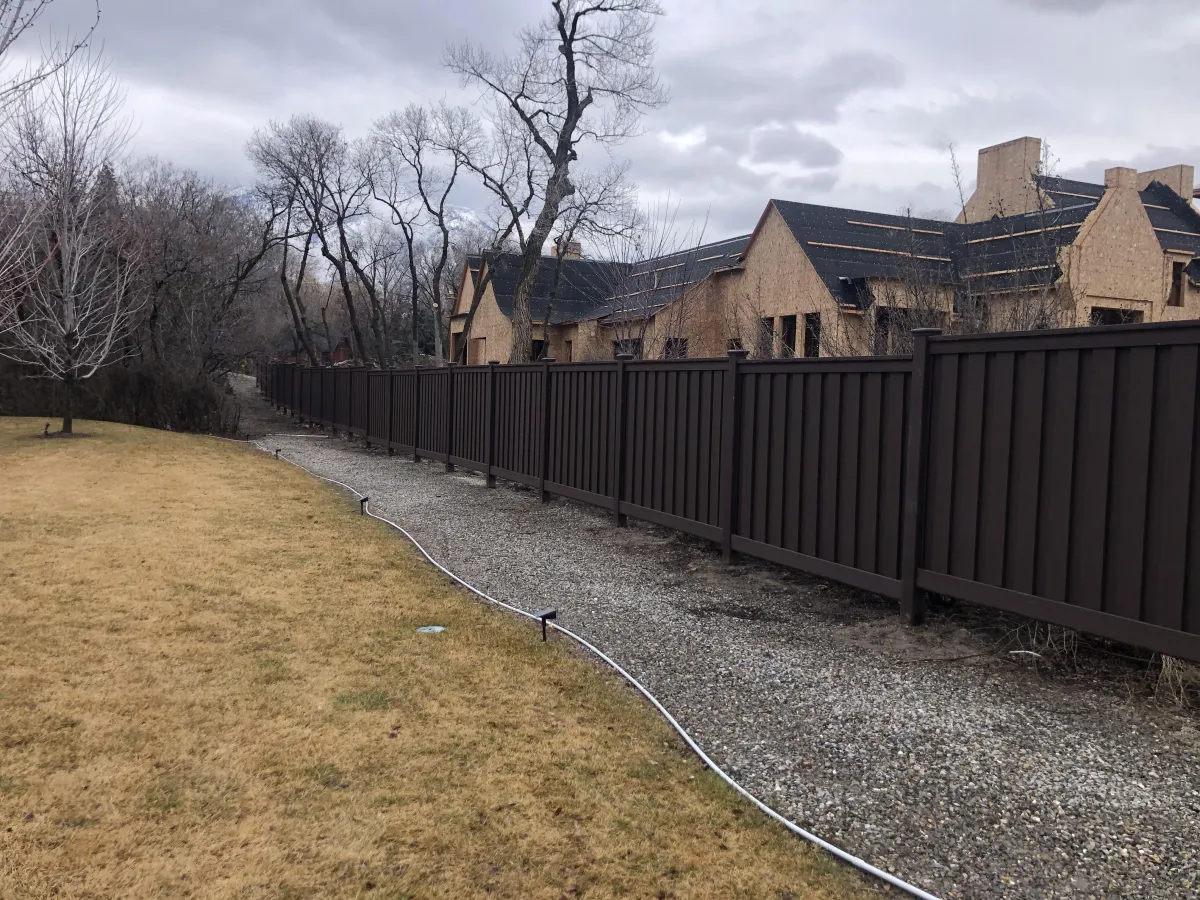
Why Concrete on Every Fence Post Matters: What Utah Homeowners Should Know
Fence Post Installation in Utah: What Actually Holds a Fence Up
Homeowners shopping for a fence usually focus on material, color, and height. The part that determines whether that fence is still straight in five years is underground: post depth, footing diameter, and concrete placement. This is a breakdown of what correct installation looks like by material, so you can evaluate a quote instead of just comparing a bottom-line number.
Utah Ground Conditions That Affect Posts
Frost depth: In the Wasatch Front (Salt Lake, Utah, Davis counties), the frost line generally runs 24–30". At higher elevations or in colder valleys, it can reach 30–36". Post footings should be set below this depth — a footing that stops short of frost depth will heave as the ground freezes and thaws.
Soil: Clay expands significantly when wet and shrinks when dry, which loosens footings over time. Sandy or loose fill soil (common in newer developments with disturbed lots) has less lateral holding strength and generally needs a wider footing diameter than the minimums below.
Wind: Solid privacy panels (wood, vinyl, Trex, Simtek) act like a sail. Open-style fencing (chain link, aluminum, some steel) passes wind through and sees less lateral load.
Snow: Drifting against solid fence lines adds static load low on the fence but rarely affects post depth requirements — it's more relevant to panel and rail strength.
Baseline Standards (All Materials)
Depth: Minimum ⅓ of the post's above-ground height, and always below local frost depth, whichever is deeper. For a standard 6' fence, that generally means a 24–30" hole.
Diameter: Roughly 3x the width of the post. A 4" post typically gets a 10–12" diameter hole.
Concrete: Fill to within a few inches of grade, then crown the surface above grade and slope it away from the post so water sheds instead of pooling and re-freezing against the post.
Corner, end, and gate posts carry more lateral load than line posts and should be set deeper and/or in a larger footing than mid-run line posts, regardless of material.
Installation by Material
Chain Link
Terminal posts (corners, ends, gates) set in concrete, minimum 24–30" deep. Line posts can sometimes be tamped/driven without concrete on stable soil, but concrete is standard practice in Utah's freeze-thaw conditions.
Line post spacing: 10' on center typical.
Post gauge/diameter: terminal posts 2–2.5" OD, line posts 1.625–1.875" OD for residential-grade fabric.
Tension wire at top and bottom (or top rail) is required for the fabric to stay taut through temperature swings — this is a rail/fabric detail, not a post issue, but it's commonly skipped on cheap installs.
Cedar (Wood)
Posts should be pressure-treated for ground contact (.40 CCA or better) even under cedar rails/pickets — untreated cedar posts will rot at the soil line within a few years.
Standard post size 4x4, gate posts and larger sections 6x6.
Spacing: 8' on center between posts is standard for rail-and-picket construction.
Concrete: standard 24–30" depth, crowned above grade. Quick-set mixes are common but should still be given time to cure before rails are attached under load.
Vinyl
Vinyl posts are hollow, which means they have less inherent shear strength than solid wood or steel — the footing does more of the structural work.
Manufacturers commonly specify a wider hole (10–12") and full concrete fill, sometimes with a rebar or steel insert set inside the post cavity for wind rating, particularly on privacy-panel styles.
Spacing follows the panel width, almost always 8' on center.
Gate posts on vinyl systems often require an internal steel reinforcement sleeve — vinyl alone will flex too much under hinge/latch stress.
Trex / Composite
Composite privacy panels are heavy and wind-loaded like solid wood, but the posts are usually steel with a composite or aluminum sleeve/skirt rather than solid composite.
Follow the specific manufacturer's post spec — steel gauge and post size vary by product line, and using an undersized post is a common way installers cut cost on Trex-branded jobs.
Concrete footing depth and diameter match the vinyl standards above; the composite skin doesn't change the structural requirement underneath it.
Avimore
Avimore is a semi-privacy vinyl fence style (lattice or picket top over a solid bottom section), commonly installed by Illusions Vinyl Fence dealers in Utah.
Installation follows standard vinyl specs above. The open top section reduces total wind load compared to full-privacy vinyl, but the footing and post spec shouldn't be downgraded — most wind load still transfers through the solid bottom panel.
Simtek
Simtek (EcoStone) panels are made of dense polyethylene molded to look like stacked stone or brick, and they're significantly heavier per linear foot than vinyl or wood — often 80–100+ lbs per section.
Posts are steel-reinforced and require larger-diameter, deeper footings than a standard vinyl or wood fence to support that dead weight, not just wind load.
This is one of the styles where "we can do it cheaper" quotes most often mean an undersized footing — ask specifically what footing diameter and depth are being used.
Steel (Ornamental / Privacy Steel)
Posts are typically steel tube, set in concrete at standard depth/diameter for the post size, with panels welded or bolted to the posts.
Galvanizing or powder coating matters more here than on other materials — an unprotected weld or cut edge will rust well before the panel itself fails, especially with Utah's winter road salt exposure in areas near streets.
Gate posts on steel fencing should be a heavier gauge than line posts; large driveway gates often need a post set in a larger-diameter footing to resist the leverage of the swinging gate.
Gate Posts, All Materials
Gates transfer repeated lateral force through the hinge side every time they're used, and more of it with a large driveway or RV gate. Gate posts should always be larger, deeper, or more heavily reinforced than the line posts next to them — a fence that treats every post identically is usually cutting a corner at the gate.
What to Ask When Comparing Quotes
A large price gap between bids is almost always a difference in what's being installed underground, not just the panel material. Ask each contractor to specify:
Post depth and hole diameter
Whether every post gets concrete, or only some
Gate post reinforcement
Whether the quote follows the manufacturer's spec sheet for that specific product line
If a bid is significantly cheaper because concrete or depth is being reduced, that's a fair trade-off to know about — just make it a decision, not a surprise.
Haven Fence installs wood, vinyl, Trex, composite, Simtek, aluminum, steel, and chain link fencing throughout Lehi, American Fork, Pleasant Grove, Highland, Saratoga Springs, Eagle Mountain, Draper, Sandy, Salt Lake City, Ogden, and Layton. Contact us for a quote that specifies exactly what's going into the ground.
For local fence installation:

Crafting Confidence, One Fence at a Time
Don’t Overpay For Low Quality Materials
Living with an unattractive fence. Facing potential security issues with inadequate boundaries. Frustrated with unreliable installation options. Dealing with constant repairs on cheap materials. Wasting weekends searching for replacement options. Having your property value decrease due to a poor fence. Facing a lengthy installation process with no support. Feeling overwhelmed by conflicting options and choices.
Built for Strength, Styled for You
Every Fence. Every Finish. Every Function.
Where strength meets design - built to last, made to stand out.
Exclusive Fence Upgrade Offer
10% OFF ANY FENCE
Strengthen your boundaries and save big with our limited-time Haven Fence Discount Event. Up to 10% off your next installation. Offer ends Sept. 9, 2026.
1. How long does a typical fence installation take?
Most residential projects take 2–5 days depending on the fence type, size, and site conditions. Our team keeps you informed from start to finish to ensure timely completion.
2. What is the number one question you should ask at your fence appointment?
Ask, “What materials and installation methods do you use to make sure my fence lasts in Utah’s weather?” This helps you understand the quality and durability of the fence your contractor will install. A reliable Utah fence company should explain how materials like vinyl, cedar, or metal perform in Utah’s freezing winters, hot summers, and unique soil conditions. They should also use proper methods—like concrete-set posts and galvanized hardware—to ensure long-term strength. This question quickly shows whether your contractor knows how to build a fence that will hold up in Utah.
3. What materials do you recommend for low maintenance?
Vinyl, metal, and composite fences are the best options for minimal upkeep. They resist fading, warping, and rust, maintaining a fresh look year after year.
4. Are you fully licensed and insured?
Yes—Haven Fence is fully licensed and insured to install residential fencing in Utah. This protects homeowners from liability and ensures your fence is built to local codes and industry standards. Working with a licensed Utah fence contractor also guarantees professional installation, reliable workmanship, and compliance with city and county regulations.
5. What warranty do you offer?
Yes. Haven Fence provides material warranties based on the fence you choose—vinyl, wood, and steel all include manufacturer coverage against defects. Every installation also comes with a 1-year workmanship warranty for added peace of mind. Whether you’re in Ogden, Salt Lake, or anywhere in Utah, we stand behind our quality and make sure your fence is built to last.
6. What maintenance is required for my fence?
Maintenance depends on your fence material and Utah’s weather. Vinyl fencing is very low-maintenance and only needs occasional cleaning. Wood fences require staining or sealing every few years to protect against sun, snow, and moisture. Composite and steel fences need minimal care—just periodic washing—to stay strong in Northern Utah’s climate. Haven Fence can help you choose the right low-maintenance option for your home.
7. How much does a new fence cost in Utah?
The cost of a new fence in Utah can vary depending on the size and details of your project. We don’t price strictly by the foot, instead, we look at the entire project, including layout, yard conditions, gates, and any custom features, to give you the most accurate quote.
Your Questions, Our Expertise
Fencing Made Clear and Simple
Trusted by Homeowners. Proven by Results.
Our Clients Speak for Our Craftsmanship.
See what satisfied customers say about their Haven Fence experience.

Before installing your fence, review neighborhood guidelines, determine your privacy or security needs, and choose materials suited to your property’s terrain and climate.
Quick Links
Services
Locations
Contact Us